Published Date: August 14, 2026
AI Summary
When people think about pizza, toppings usually get most of the attention. Yet the crust determines much of the pizza’s texture, structure and flavour before the sauce, cheese or toppings are added.
For Italian pizza in Singapore, four kitchen decisions matter especially: flour, water, fermentation time and baking heat. When those elements work together, the crust becomes part of the dish rather than simply something underneath it.
Pizza menus naturally draw attention to toppings. Prosciutto, mushrooms, seafood, cheese and other ingredients are easy to compare, but they only make up part of the finished dish.
The crust is what holds everything together. It influences how the pizza feels when you pick up a slice, how easily it folds or stays firm, and whether each bite feels crisp, chewy, tender or dense.
For diners choosing Italian pizza in Singapore, crust quality can therefore tell you a great deal about how the pizza has been prepared.
At Pasta Fresca, we have made fresh dough in-house since 1988, first for our pasta and with the same care for our pizzas, so we know how much the base decides the finished dish.
Four factors play particularly important roles:
None works in isolation. A good pizza dough depends on how all four are balanced.
Flour may look like the simplest ingredient in pizza dough, but it plays a major role in determining the final crust.
Different flours contain different amounts and types of protein. When flour is mixed with water, proteins help form gluten, which gives dough elasticity and structure.
That structure allows the dough to stretch while still trapping gases produced during fermentation. It also influences whether the finished crust feels soft, chewy, crisp or somewhere in between.
| Flour Consideration | Why It Matters |
| Protein content | Influences gluten strength and dough structure |
| Water absorption | Affects how much hydration the dough can handle |
| Fermentation suitability | Helps determine how dough performs over time |
| Pizza style | Supports the intended texture and structure |
Traditional Neapolitan-style pizza is typically made with finely milled “00” flour, which produces a soft, extensible dough. But flour alone does not make the pizza; it still needs to suit the recipe, the fermentation time, and the baking method.
Water is not simply added to make dry flour workable. The amount of water relative to flour, known as hydration, can substantially change the dough.
Hydration can influence:
Higher hydration can contribute to a lighter, more open texture in some pizza styles, but more water does not automatically mean better dough.
The flour must be capable of handling that hydration, and the dough still needs appropriate fermentation and baking conditions. A successful pizza recipe is therefore about balance rather than simply maximising any one ingredient.
Pizza dough does not necessarily reach its potential immediately after mixing.
During fermentation, yeast activity produces gases that help the dough rise. At the same time, the dough continues developing in ways that influence flavour, elasticity and structure.
Properly managed fermentation can contribute to:
Time is only part of the equation. Temperature also affects how quickly fermentation takes place, which is why there is no single number of hours that applies to every pizza dough.
This is an important part of pizza-making because much of the character of the finished crust is created before the pizza reaches the oven.
Even carefully mixed and fermented dough can disappoint if it is baked under unsuitable conditions.
Heat causes gases within the dough to expand rapidly, helping the crust rise during the early stage of baking. This process contributes to the final structure and can create the lightness and air pockets associated with many Italian pizza styles.
The right baking conditions can also help produce:
Different styles of Italian pizza can require different combinations of baking temperature and time. The important point is not that one oven or temperature is universally correct, but that the dough and baking method need to work together.
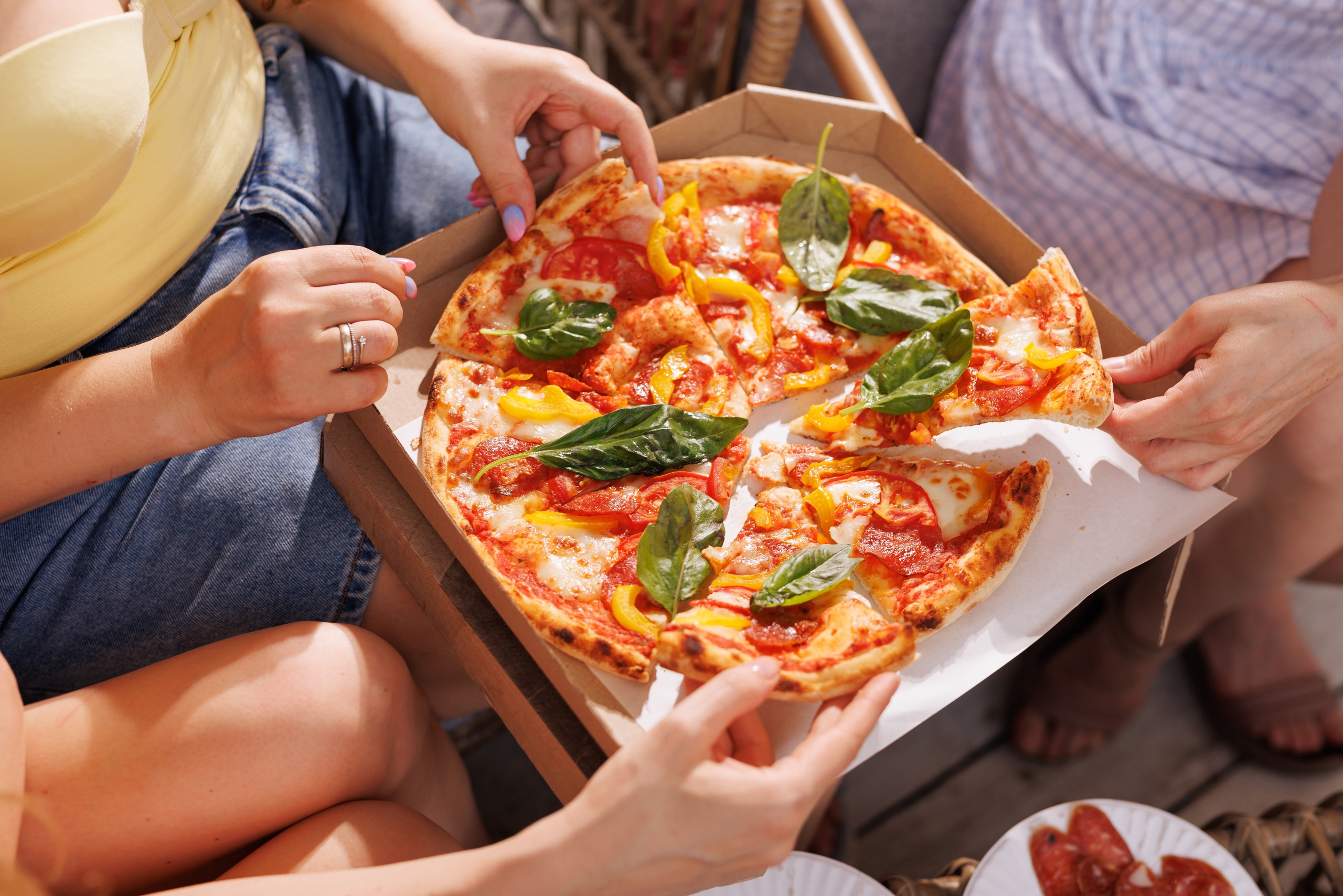
You do not need to work in a kitchen to notice whether a pizza crust has been handled well.
A few characteristics can offer useful clues:
Italian pizza does not have one universal crust texture. Different regional and restaurant styles can produce different results.
If you want to explore different options, Pasta Fresca’s guide to Italian pizza in Singapore highlights several pizzas worth considering.
It is easy to assume that adding more cheese, meat or vegetables automatically makes pizza more satisfying. In practice, excessive toppings can create new problems.
Too many ingredients may introduce additional moisture, weigh down the centre or make the crust harder to support. They can also overwhelm the flavour that has developed in the dough.
Traditional Italian pizza often places greater emphasis on balance. The crust, sauce, cheese and toppings each have a role, but none needs to dominate every bite.
A well-made crust gives those ingredients a strong foundation. Without it, even premium toppings can struggle to rescue the finished pizza.
Great pizza starts well before the toppings are added. At Pasta Fresca Da Salvatore, our dough is made fresh in-house and fermented slowly, because time in the dough is what turns a flat base into a crust worth eating.
As a general guide, many traditional pizzerias ferment their dough anywhere from 24 to 72 hours and bake at very high heat, often above 400°C, to get a crust that is light inside and properly cooked outside.
Understanding these elements can make it easier to appreciate why two pizzas with similar toppings can taste and feel very different. For more ideas on what to order, read Pasta Fresca’s guide to Italian pizza in Singapore.
If you would like to make a reservation or ask about dining options, you can also contact Pasta Fresca.
A good crust depends on the relationship between flour, hydration, fermentation and baking conditions. It should have a texture and structure appropriate to its particular pizza style while contributing flavour to the finished dish.
Fermentation allows yeast activity to produce gases that help the dough rise while also contributing to flavour and structure. Time and temperature both affect how the dough develops.
It can be either, depending on the pizza style. Some crusts combine a crisp exterior with a softer or chewier interior, while others may be thinner and firmer.
Yes. Flour influences gluten development, water absorption and dough strength, all of which can affect the final texture and structure.
Look for restaurants where attention is paid not only to toppings but also to dough preparation, fermentation and baking. Pasta Fresca also has a guide to must-try Italian pizzas in Singapore if you want to explore different options.
