Not all pasta is created equal. There is a tangible difference between a standard bowl of pasta and a handmade one, a difference that your palate would discern and appreciate.
Many people eat store-bought pasta every day without thinking about it. They might not realise that a much better version, one made with love and effort, exists.
This blog will help you understand that difference. It will help you distinguish between handmade pasta in Singapore and normal, store-bought pasta.
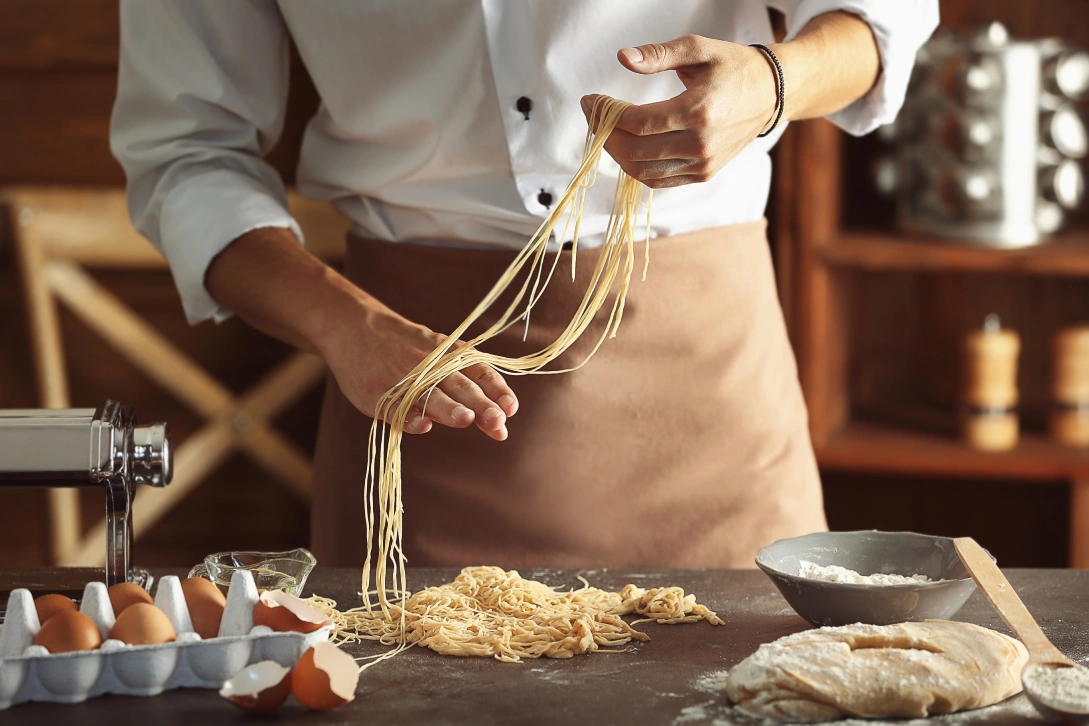
Handmade pasta is often called “pasta fresca” in Italian. This translates directly to “fresh pasta.”
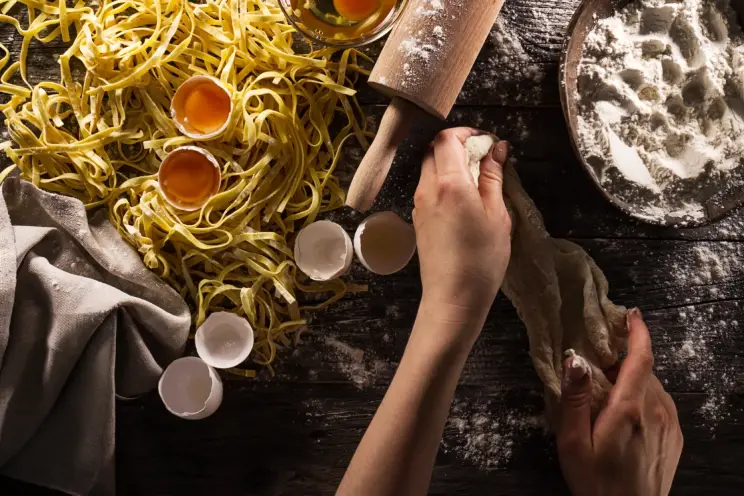
It’s pasta made from scratch. A chef starts with eggs and flour, then works them into a dough. The dough must be kneaded for several minutes. This develops the gluten and gives the pasta its structure.
After the dough has rested, it is rolled out. It can be rolled by hand with a rolling pin or with a rolling machine.
Finally, the chef cuts or shapes the pasta into various forms. Spaghetti, fettuccine, sheets for lasagne, they could make stuffed pasta, like ravioli.
This process differs from how factory-made pasta is produced. It involves a human touch and attention to detail. Each batch is slightly unique. This is why many people consider it an artisanal product.
“Normal” pasta usually refers to dried or store-bought pasta.
It is made from durum wheat semolina and water. It does not usually contain eggs. This pasta is made in large factories. The dough is pushed through metal moulds called dies. Then it is dried at high temperatures for an extended period. This makes it hard and shelf-stable. You can keep it in your cupboard for months or even years.
This store-bought pasta is designed for transport, shelf storage, and immediate cooking in boiling water. It provides convenience to households at the compromise of heritage and handmade cooking.
Handmade pasta is the opposite. It is meant to be eaten immediately.
Because it contains fresh eggs, it has a much shorter shelf life. You cannot store it in a pantry. It must be kept in a fridge or a freezer. The production method also differs: it is typically made in-house by the restaurant.
Though it is more inconvenient to store and transport than standard pasta, it offers a better taste and texture and is more rooted in Italian culture.
Between standard and handmade pasta, it can be hard to tell without knowing what to look for.
Here are the main ways to tell the difference:
Normal dried pasta has a very neutral flavour. It tastes mostly of wheat. It is designed to be a vehicle for the sauce. It does not provide much flavour on its own.
Handmade pasta has more flavour to its profile. The use of eggs makes it rich and buttery, a taste that store-bought pasta cannot replicate. If your pasta tastes like more than just flour and water, it is likely handmade.
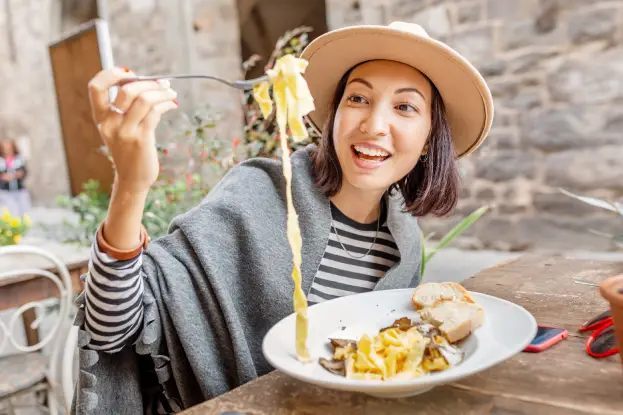
Uniformity is a sign of a factory. Machines are very good at making every piece of pasta exactly the same. If every strand of spaghetti is the same width and thickness, it is probably dried pasta.
Handmade pasta often has slight variations. Even with a rolling machine, the thickness can vary depending on how the chef handles the dough. When you look at handmade noodles, you might see small differences in the edges. Some parts may be slightly thicker than others. This is not a flaw. It is a sign of authenticity. They show that a human hand was involved in the process.
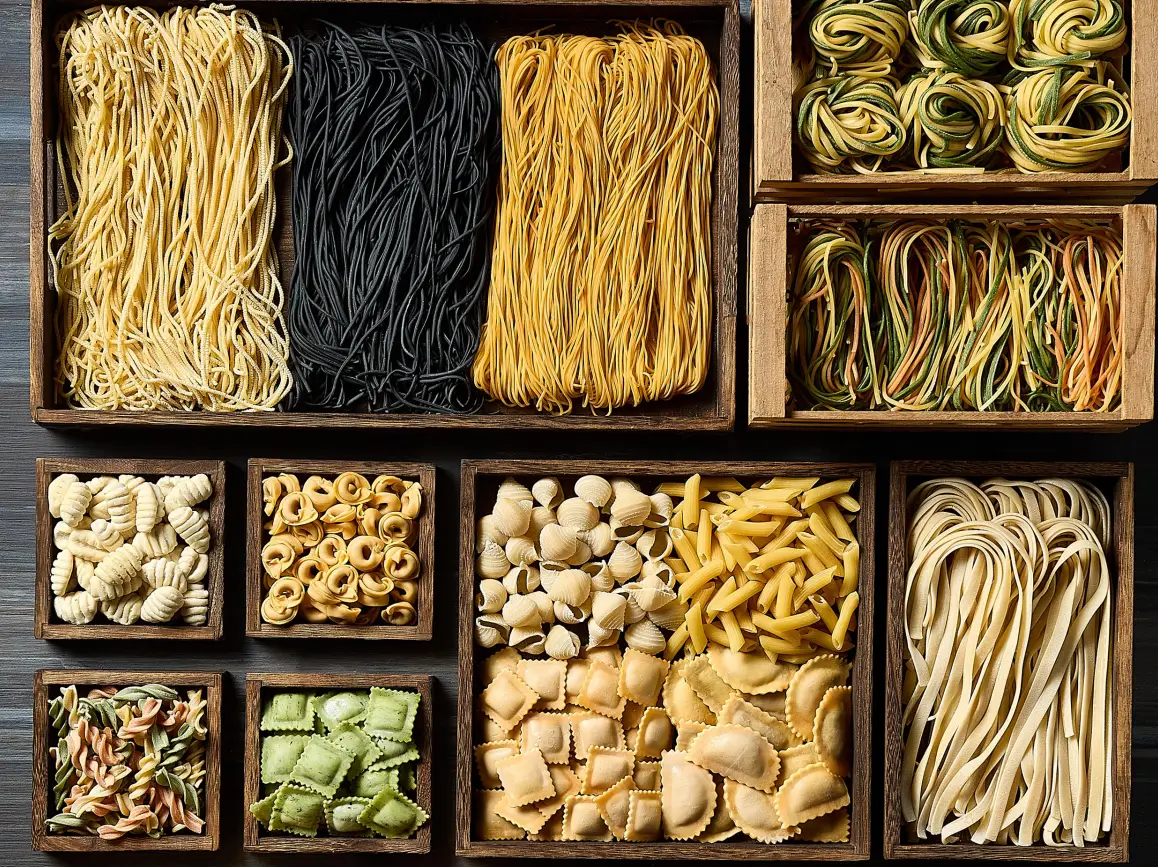
Dried pasta comes in very common shapes. Everyone knows penne, fusilli, and spaghetti. These shapes are easy for machines to produce in bulk.
Handmade pasta offers a much wider world of shapes. You will see items such as garganelli, orecchiette, or agnolotti. These shapes often require manual folding or rolling.
Ravioli is almost always a sign of fresh pasta. A chef has to stuff each pocket and seal the edges. If the shape on your plate looks intricate or unusual, it’s certainly handmade pasta. It demonstrates the restaurant’s dedication to the craft of pasta making.
Normal pasta is often very smooth. It has a glassy appearance and texture, making it silky. This is because it is pushed through Teflon dies in a factory.
Handmade pasta has a rougher and more porous surface. If you look closely, it appears slightly matte. It is not shiny. A rough surface allows the sauce to cling more to the pasta, making the overall dish a more harmonious blend of flavours.
Dried pasta starts out solid until it is boiled in water. As a result, chefs can adjust the pasta’s stiffness by cooking it for different lengths of time. Most chefs and patrons prefer an al dente level of toughness.
Handmade pasta is much more tender. It cooks significantly faster than dried pasta. Therefore, handmade pasta is naturally more tender, so its ‘al dente’ bite is softer than dried pasta.
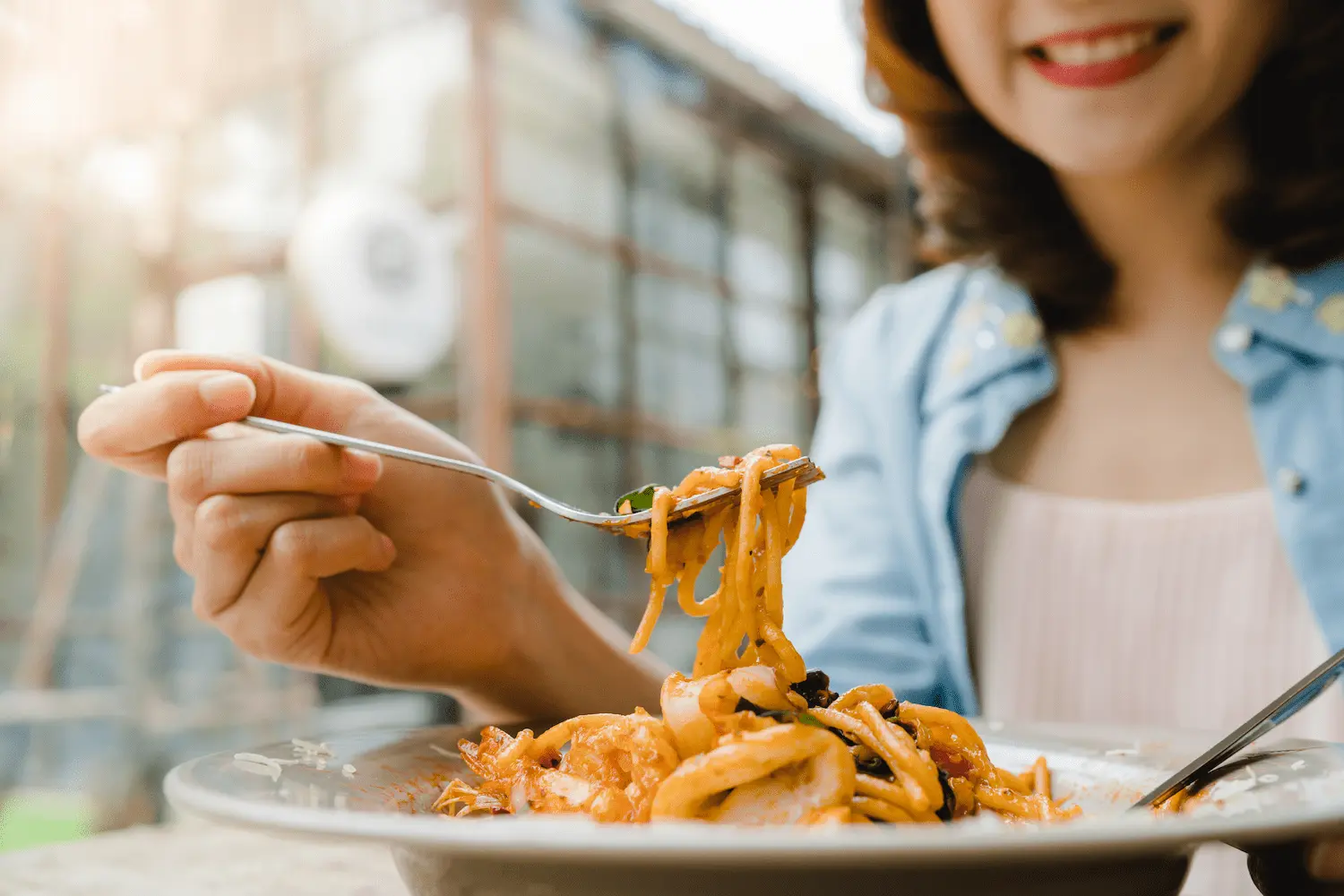
Because handmade pasta is porous, it acts like a sponge. It absorbs the sauce into the dough itself, flavouring the pasta inside and out. The rough outer texture also helps the sauce cling to the pasta. In a bowl of handmade pasta, the sauce and the noodles become one. They are perfectly integrated.
Normal pasta’s smoothness causes the sauce to slide off the noodles and pool at the bottom of the bowl.
If you’re eating pasta where the sauce clings and absorbs well into the pasta, you’re likely eating handmade pasta.
When you’re coming from work and need to cook a quick meal, normal pasta is the way to go. You won’t have the time, nor the energy, to knead, roll, and shape your dough.
However, the experience that handmade pasta affords over normal pasta is something to be savoured at least occasionally in your busy life:
The taste and experience of handmade pasta are discernible from those of store-bought pasta. It turns a simple meal into a special occasion.
For foodies, the texture and the sauce adherence alone are enough to make the switch.
Singapore has many great spots for pasta lovers. You can find everything from casual pasta bars to upscale trattorias. Here are some well-known places where you can enjoy high-quality pasta:
Visit us at Pasta Fresca Da Salvatore for quality, handmade pasta in Singapore. We are passionate about the traditions of Italian cooking. We believe that everyone in Singapore should try authentic, handmade pasta.
Our pasta is made fresh every day, ensuring the highest quality food and service. Our menu allows you to pair your favourite handmade shape with a variety of delicious sauces. Whether you love a classic fettuccine or a stuffed ravioli, we have something for you.
We have several locations across Singapore, including Boat Quay and Bukit Timah. Each outlet offers a cosy and welcoming atmosphere for families, couples, and friends.
Visit Pasta Fresca today and discover the joy of real Italian pasta.
Because handmade pasta is made from soft flour and fresh eggs, it is naturally tender and cannot achieve the same hard, bony centre as dried durum wheat pasta. While it should still have a slight resilience, it is generally softer than the al dente crunch of a boxed brand.
The higher price reflects the cost of ingredients, such as fresh eggs and speciality Italian flour, as well as the labour required. It takes significant time to knead, rest, and hand-shape the dough. Also, shipping out handmade pasta requires specialised cooling to keep it frozen.
Handmade pasta is made in-house without the preservatives or stabilisers required for long-term shelf storage. Additionally, fresh eggs have higher protein content, making the meal more nutrient-dense.
Shapes like Orecchiette (little ears) or Conchiglie (shells) are specifically designed to act as “scoops” for thicker sauces.
Unlike dried pasta, which can last for years, fresh handmade pasta should ideally be eaten the day it is made. If necessary, it can be stored in the refrigerator for one to two days or frozen to prevent spoilage.
